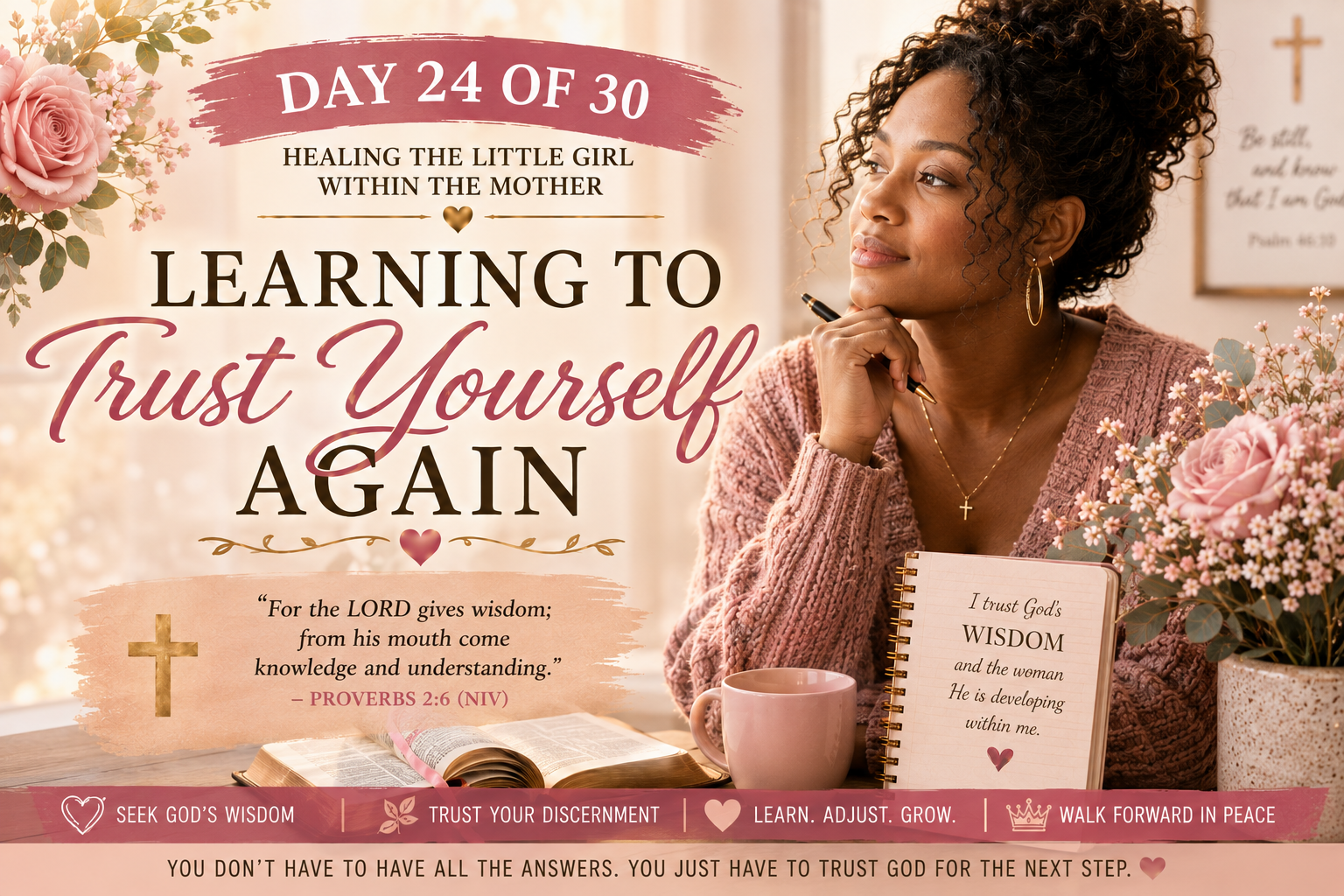
Day 24 — Learning to Trust Yourself Again
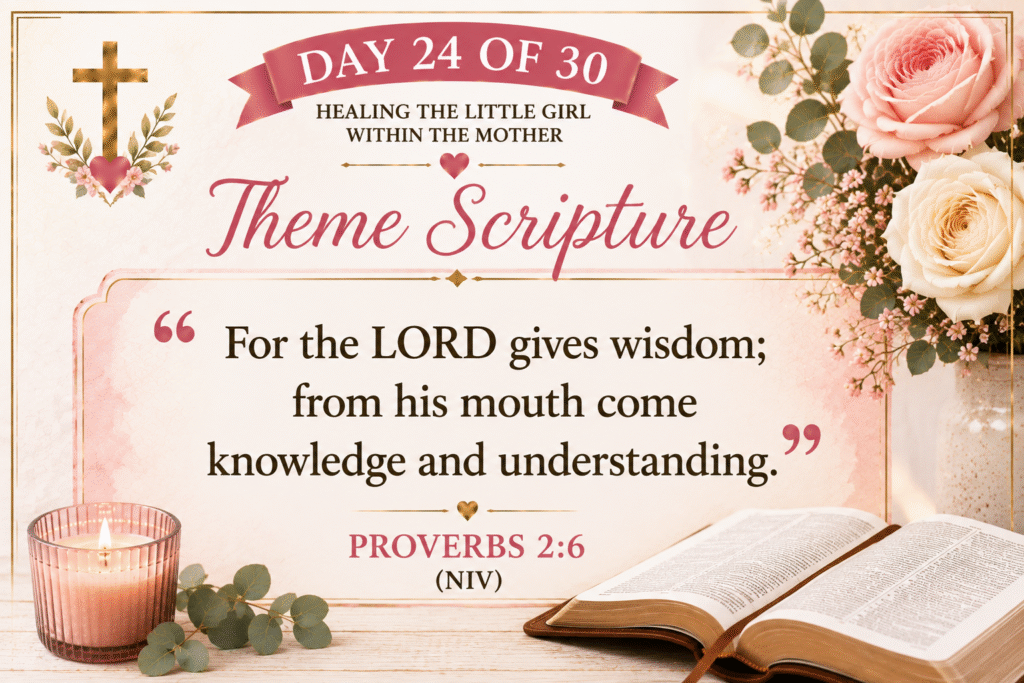
Theme Scripture
“For the LORD gives wisdom; from his mouth come knowledge and understanding.”
— Proverbs 2:6 (NIV)
There comes a point in healing when you realize something painful:
You don’t only struggle to trust other people.
Sometimes you struggle to trust yourself.
You make a decision and immediately question it. “Did I do the right thing?” You feel uncomfortable around someone and then tell yourself: “Maybe I’m just being too sensitive.” You establish a boundary and spend the rest of the day wondering: “Was I wrong for saying that?”
Yesterday, on Day 23, we talked about learning to speak up for yourself. But finding your voice is only part of healing. Eventually, you must also learn to trust the woman who is using that voice.
The little girl within you may have learned: “I don’t know what’s best.” “Other people know better than I do.” “My feelings aren’t reliable.” “Maybe I’m imagining things.” “I always get things wrong.”
But the woman God is healing is learning: “I don’t have to know everything to trust myself. I can seek God’s wisdom, learn from experience, and make thoughtful decisions with confidence and peace.”
How Does a Little Girl Stop Trusting Herself?
Children aren’t born constantly questioning themselves. A little girl knows when she’s hungry, tired, frightened, hurt, uncomfortable, or in need of comfort.
But imagine repeatedly hearing “You’re fine” when you don’t feel fine, “Stop crying” when something hurts, “You’re being dramatic” when you’re genuinely upset, or “You don’t know what you’re talking about” when you’re trying to explain yourself.
Over time, a child can begin looking outside herself for confirmation of what is happening inside her. Instead of thinking, “I feel uncomfortable, so I should pay attention,” she begins thinking, “Am I allowed to feel uncomfortable?”
When Your Reality Was Dismissed
One of the most damaging things that can happen to a child is repeatedly having her reality dismissed.
Eventually, she may stop trusting what she sees, feels, remembers, or senses. That little girl can become a woman who constantly asks: “Am I overreacting?”
We all misunderstand situations occasionally. But the deeper problem is when you automatically assume your perception must be wrong. Healing means learning to investigate your feelings instead of immediately invalidating them.
Your Feelings Are Not Always Facts—but They Still Matter
Healing does not mean believing that if you feel something, it must automatically be true. Feeling rejected does not always mean someone rejected you. Feeling afraid does not always mean you are in danger. Feeling guilty does not always mean you’ve done something wrong.
But feelings are still information. They deserve attention. Instead of saying, “This feeling is definitely true,” or “This feeling is stupid and doesn’t matter,” ask: “What is this feeling trying to tell me?” Then examine it with prayer, wisdom, evidence, and discernment.
You May Have Learned to Outsource Your Decisions
There is nothing wrong with seeking wise counsel. Scripture values wisdom and godly counsel. But there is a difference between seeking counsel and needing permission.
Other people can advise you, but they cannot live your life for you. They do not carry every responsibility you carry, know every detail, experience every consequence, or replace your own relationship with God.
Wise Counsel Should Support Discernment, Not Replace It
A healthy adviser helps you process. They may ask what you believe God is showing you, what Scripture says, or what consequences you have considered.
Healthy wisdom equips you. Control makes you dependent.
You Are Allowed to Change Your Mind
Sometimes we don’t trust ourselves because we believe every decision must be permanent. But learning sometimes requires adjustment.
You can say: “I thought this would work, but it doesn’t.” “I have new information now.” “I’ve prayed about this again.” “I’ve reconsidered.”
Growth is allowed to change your perspective.
Making a Mistake Does Not Mean You Cannot Trust Yourself
You will make mistakes. Self-trust does not mean believing you will always make the right decision.
Self-trust means knowing: “If I make a mistake, I can learn, adjust, seek God, make amends when necessary, and move forward.”
You don’t need to guarantee perfection before trusting yourself.
Stop Using Your Worst Decision as Evidence Against Yourself
Perhaps you made a decision years ago that still bothers you. You trusted the wrong person, stayed too long, ignored something, or made a choice you now regret.
But one decision—or even several decisions—doesn’t get to become the permanent definition of your judgment.
Ask instead: What did that experience teach me? The woman making decisions today has information the younger version of you did not have. Give her credit for what she has learned.
Sometimes You Made the Best Decision You Could With What You Knew
Looking backward can make everything appear obvious. You think, “I should have known.” But did you have the information, maturity, support, resources, knowledge, confidence, and boundaries then that you have today?
Sometimes you weren’t foolish. You simply didn’t know yet.
Offer your younger self the grace of hindsight without the cruelty of hindsight.
Trauma Can Make Every Decision Feel Dangerous
If decisions in your childhood carried unpredictable consequences, making choices as an adult can feel frightening. You may overthink, rehearse possibilities, anticipate every outcome, and worry about disappointing someone.
But you cannot control every outcome through perfect decision-making. Sometimes you must gather the information you have, pray, use wisdom, make the best decision available—and release the outcome to God.
God’s Wisdom Is Available to You
Today’s Scripture reminds us that wisdom ultimately comes from God.
You can ask: “Lord, show me what I am missing. Give me wisdom. Help me recognize what is true. Reveal anything I am ignoring. Help me make this decision without fear controlling me.”
You are not expected to know everything. You are invited to seek the One who does.
God’s Guidance and Your Growth Can Work Together
Trusting God does not require believing you are incapable of learning, reasoning, discerning, or making decisions.
God gave you a mind. He allows you to gain wisdom. He teaches you through experience. He gives discernment, Scripture, conviction, and opportunities to mature.
The healthier understanding is: “Because I trust God, I can trust the wisdom He is developing within me.”
Learn the Difference Between Fear and Discernment
Fear often sounds frantic: “Something terrible is going to happen.” “Decide right now!” “You can’t handle this.”
Discernment can be quieter: “Something here needs another look.” “Don’t rush.” “Ask another question.” “This doesn’t align with your values.”
Fear demands certainty. Wisdom allows investigation. When you’re unsure, slow down when possible, pray, gather information, and pay attention.
Pay Attention to Patterns
Trusting yourself doesn’t mean relying only on feelings. Look at patterns.
Repeatedly ignored boundaries are information. Consistent integrity, respect, accountability, and kindness are information too.
Healing means learning to observe what is actually happening instead of automatically talking yourself out of what you’re noticing.
Stop Explaining Away Every Red Flag
Compassion is beautiful, and understanding someone’s history can be helpful. But understanding why someone behaves a certain way does not require accepting harmful behavior.
You can understand someone’s wounds and still say: “This behavior is not healthy for me.”
Empathy and boundaries can exist together.
Trust the “Pause”
Sometimes self-trust looks like not deciding yet.
You are allowed to say: “I need time to think.” “Let me pray about that.” “I’ll get back to you.” “I’m not ready to make that decision.”
Urgency is not always wisdom. Sometimes the most mature decision is: “Not yet.”
You Don’t Owe Everyone Immediate Access to Your Decisions
As you heal, you may stop announcing every idea before you’ve prayed about it or asking ten people whether they approve.
Not every seed needs to be dug up repeatedly so everyone can inspect whether it’s growing. Some things need time with God before they need an audience.
Stop Confusing Someone’s Disappointment With Your Mistake
Someone else’s disappointment does not automatically mean your decision was wrong.
Sometimes your healthy decision inconveniences someone. Sometimes your boundary removes access they were accustomed to. Sometimes your growth changes a dynamic they preferred.
You can consider their perspective without surrendering your judgment.
Your Body Can Give You Information Too
Our bodies often respond to stress before we’ve consciously processed what’s happening. That does not mean every physical sensation is spiritual discernment or proof that something is wrong.
But neither should you automatically ignore what your body is communicating. Pause and ask: “What am I responding to?” The goal is not fear. The goal is awareness.
Rebuilding Self-Trust Happens Through Small Decisions
You don’t have to begin with a life-changing decision. Start small.
What do you want for dinner? Which outfit do you prefer? Do you actually want to attend that event? What does your schedule realistically allow?
Practice choosing. Small decisions strengthen the muscles required for bigger ones.
Your “No” Does Not Need a Committee Vote
Once you have thoughtfully decided that something isn’t right for you, you don’t necessarily need five people to confirm that you’re allowed to say no.
You can pray, evaluate, seek counsel when needed, and then decide.
Your life cannot be governed entirely by consensus.
Debbie’s Reflection
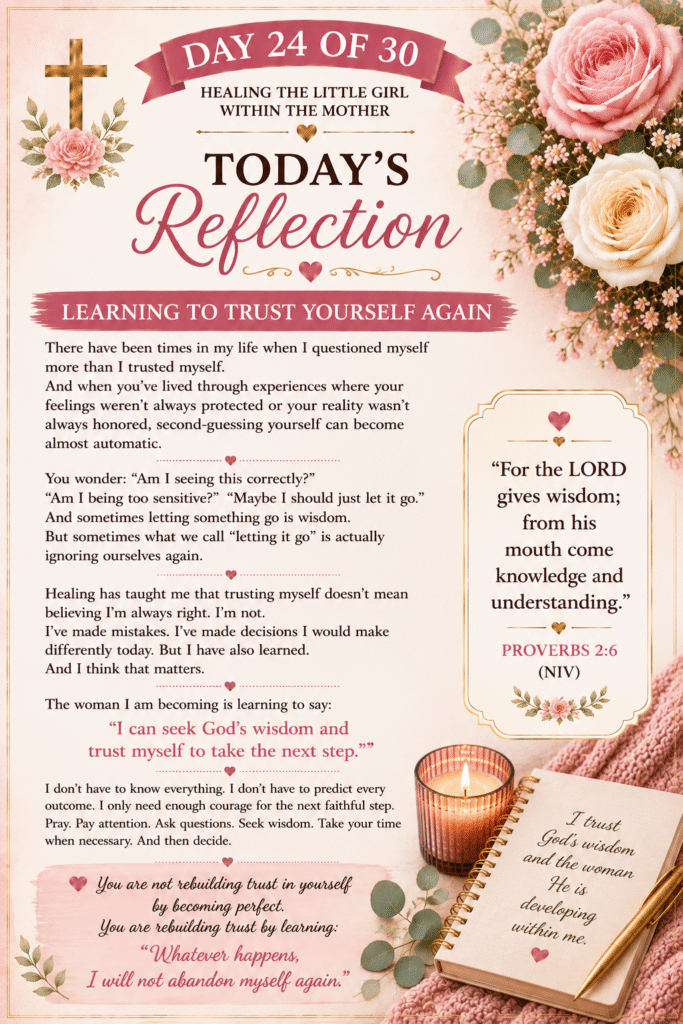
There have been times in my life when I questioned myself more than I trusted myself.
When you’ve lived through experiences where your feelings weren’t always protected or your reality wasn’t always honored, second-guessing yourself can become almost automatic.
Healing has taught me that trusting myself doesn’t mean believing I’m always right. I’m not. I’ve made mistakes. I’ve made decisions I would make differently today. But I have also learned.
The woman I am today has lived, survived, prayed, raised children, built a home, made mistakes, gotten back up, learned boundaries, recognized patterns, and most importantly, learned to seek God.
Because I trust God, I am learning not to live afraid of every decision.
I can pray. I can gather information. I can ask wise questions. I can listen. I can pay attention. And then I can make a decision.
If I’m wrong, God is still God. If I need to adjust, I can adjust. If I need to apologize, I can apologize. If I need to begin again, I can begin again.
I don’t need perfection to trust myself. I need grace, wisdom, humility, and courage.
The little girl within me may have learned to look outside herself for permission. But the woman I am becoming is learning to say: “I can seek God’s wisdom and trust myself to take the next step.”
You Don’t Have to Have Your Entire Future Figured Out
God often gives enough light for the next step.
You may not know exactly how everything will work. But perhaps you know what the next faithful step is. Take that one. Then the next.
Self-trust grows when you stop demanding that yourself know things only God can know.
Give Yourself Permission to Learn
Instead of saying, “I have to get this perfect,” try: “I am going to make the wisest decision I can with what I know today.”
If new information comes, you can adjust. If something doesn’t work, you can learn. If a door closes, you can redirect. If you discover you were wrong, you can admit it.
You are not trapped by your decisions. You are growing through them.
Reflection Questions
- When did I first begin questioning whether I could trust my own feelings, judgment, or decisions?
- Do I regularly ask other people for reassurance after I have already made a decision? What am I afraid will happen if I trust myself?
- Is there a past mistake I continue using as evidence that I cannot make good decisions? What did that experience actually teach me?
- Is there something in my life right now that I keep explaining away even though I know it deserves my attention?
- What would it look like to seek God’s wisdom, gather the information I need, and confidently take the next step without demanding perfect certainty?
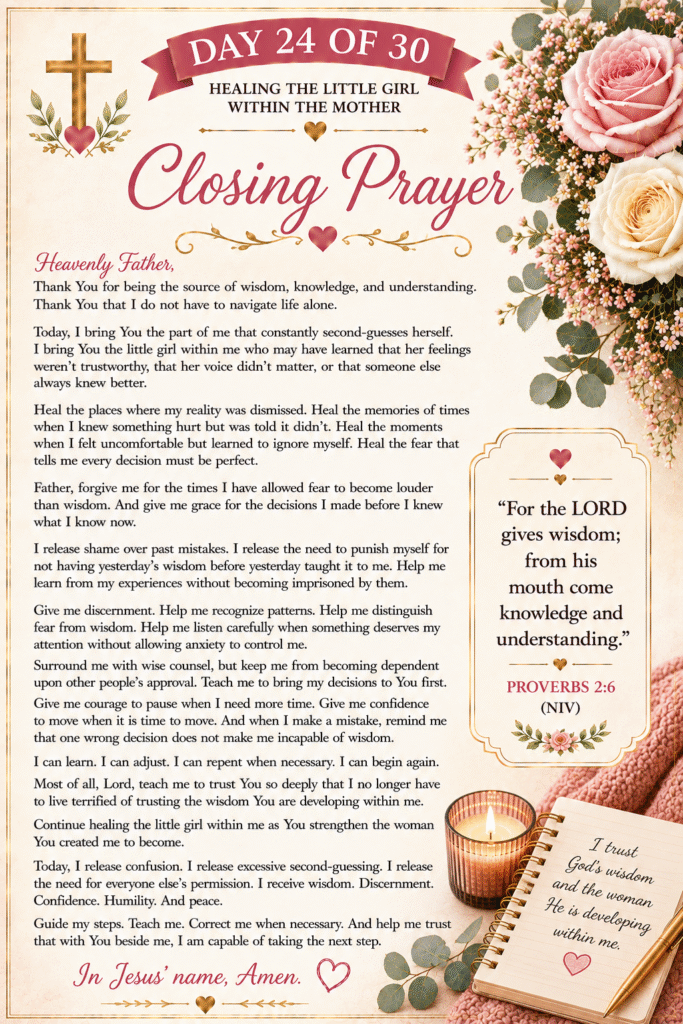
Closing Prayer
Heavenly Father,
Thank You for being the source of wisdom, knowledge, and understanding. Thank You that I do not have to navigate life alone.
Today, I bring You the part of me that constantly second-guesses herself. I bring You the little girl within me who may have learned that her feelings weren’t trustworthy, that her voice didn’t matter, or that someone else always knew better.
Heal the places where my reality was dismissed. Heal the fear that tells me every decision must be perfect. Give me grace for the decisions I made before I knew what I know now.
I release shame over past mistakes. Help me learn from my experiences without becoming imprisoned by them.
Give me discernment. Help me recognize patterns. Help me distinguish fear from wisdom. Surround me with wise counsel, but keep me from becoming dependent upon other people’s approval.
Teach me to bring my decisions to You first. Give me courage to pause when I need more time and confidence to move when it is time to move.
When I make a mistake, remind me that one wrong decision does not make me incapable of wisdom. I can learn. I can adjust. I can repent when necessary. I can begin again.
Most of all, Lord, teach me to trust You so deeply that I no longer have to live terrified of trusting the wisdom You are developing within me.
Today, I release confusion, excessive second-guessing, and the need for everyone else’s permission. I receive wisdom, discernment, confidence, humility, and peace.
Guide my steps. Teach me. Correct me when necessary. Help me trust that with You beside me, I am capable of taking the next step.
In Jesus’ name,
Amen.
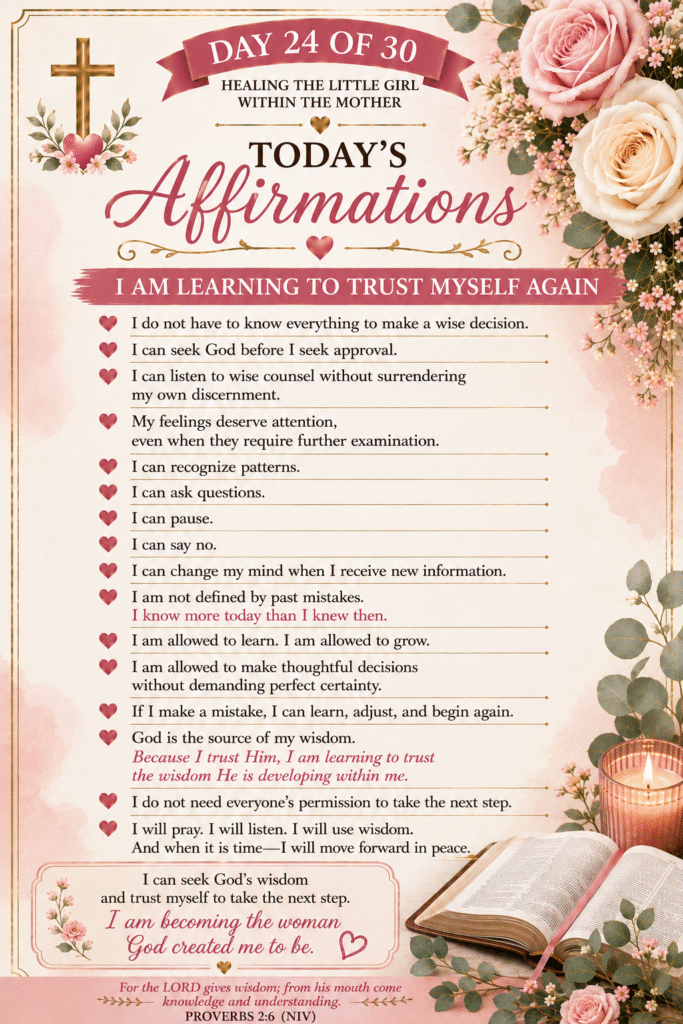
Today’s Affirmation
I AM LEARNING TO TRUST MYSELF AGAIN
I do not have to know everything to make a wise decision.
I can seek God before I seek approval. I can listen to wise counsel without surrendering my own discernment. My feelings deserve attention, even when they require further examination.
I can recognize patterns. I can ask questions. I can pause. I can say no. I can change my mind when I receive new information.
I am not defined by past mistakes. I know more today than I knew then.
I am allowed to learn. I am allowed to grow. I am allowed to make thoughtful decisions without demanding perfect certainty.
If I make a mistake, I can learn, adjust, and begin again.
God is the source of my wisdom. Because I trust Him, I am learning to trust the wisdom He is developing within me.
I do not need everyone’s permission to take the next step.
I will pray. I will listen. I will use wisdom. And when it is time—I will move forward in peace.
Journal Prompt — Rebuilding Trust in Myself
At the top of today’s journal page, write: “Can I Trust Myself?”
Complete these statements:
I tend to second-guess myself when…
The person whose approval I most often seek is…
I am afraid to make the wrong decision because…
One past decision I still judge myself for is…
What that experience taught me was…
Something I know now that I didn’t know then is…
Create two columns: “What Fear Says” and “What Wisdom Says.”
Finish with: “I forgive myself for what I did not know then. I honor what experience has taught me, and I trust God to guide the woman I am becoming.”
Then write three things about yourself that you trust today. Let yourself recognize how much you have grown.
Today’s Healing Challenge
Today, make one small decision without asking someone else to validate it.
Choose something low-risk. Decide what you want to eat, what you want to wear, how you want to spend an hour of your time, which task needs your attention first, or say no to something you genuinely don’t have capacity for.
Then resist the urge to ask: “Do you think I made the right choice?”
Instead, tell yourself: “I made a thoughtful decision. I don’t need to keep reopening it.”
And move forward.
A Truth to Carry With You Today
Little girl, there may have been times when you knew something wasn’t right, but nobody listened. Maybe your feelings were inconvenient. Maybe your questions were dismissed. Maybe your “no” wasn’t respected.
So eventually, you stopped asking, “What do I think?” and started asking, “What does everyone else think I should think?”
But you don’t have to live that way anymore.
The woman you have become has learned things. She has lived. She has survived. She has made mistakes. She has discovered what those mistakes taught her. She has developed boundaries. She has gained wisdom.
And she has access to a God who promises wisdom when she seeks Him.
You don’t have to know everything. You don’t have to predict every outcome. You don’t have to guarantee you’ll never make another mistake.
Pray. Pay attention. Ask questions. Seek wisdom. Take your time when necessary. And then decide.
You are not rebuilding trust in yourself by becoming perfect. You are rebuilding trust by learning: “Whatever happens, I will not abandon myself again.”
And even more importantly: God will not abandon me either.
Take the next step, Mama. Not because you know everything, but because you’re learning, growing, listening, praying, and becoming wiser every day.
Tomorrow — Day 25: Grieving What You Never Received
Theme Scripture:
“The LORD is close to the brokenhearted and saves those who are crushed in spirit.”
— Psalm 34:18 (NIV)
Tomorrow’s healing work will take us somewhere tender.
Sometimes healing isn’t only about forgiving what happened. Sometimes we must also grieve what should have happened but didn’t—the childhood you deserved, the protection you needed, the affection you wanted, the mothering you longed for, and the safety every little girl should know.
Day 25 will give us permission to acknowledge those losses without becoming trapped inside them.
The little girl within you may still ask: “Why didn’t I get that?”
But the woman God is healing is learning: “I can grieve what I didn’t receive, honor what I lost, and still move forward with God into what is possible now.”

1 Comment
[…] Healing the Little Girl Within the Mother […]