
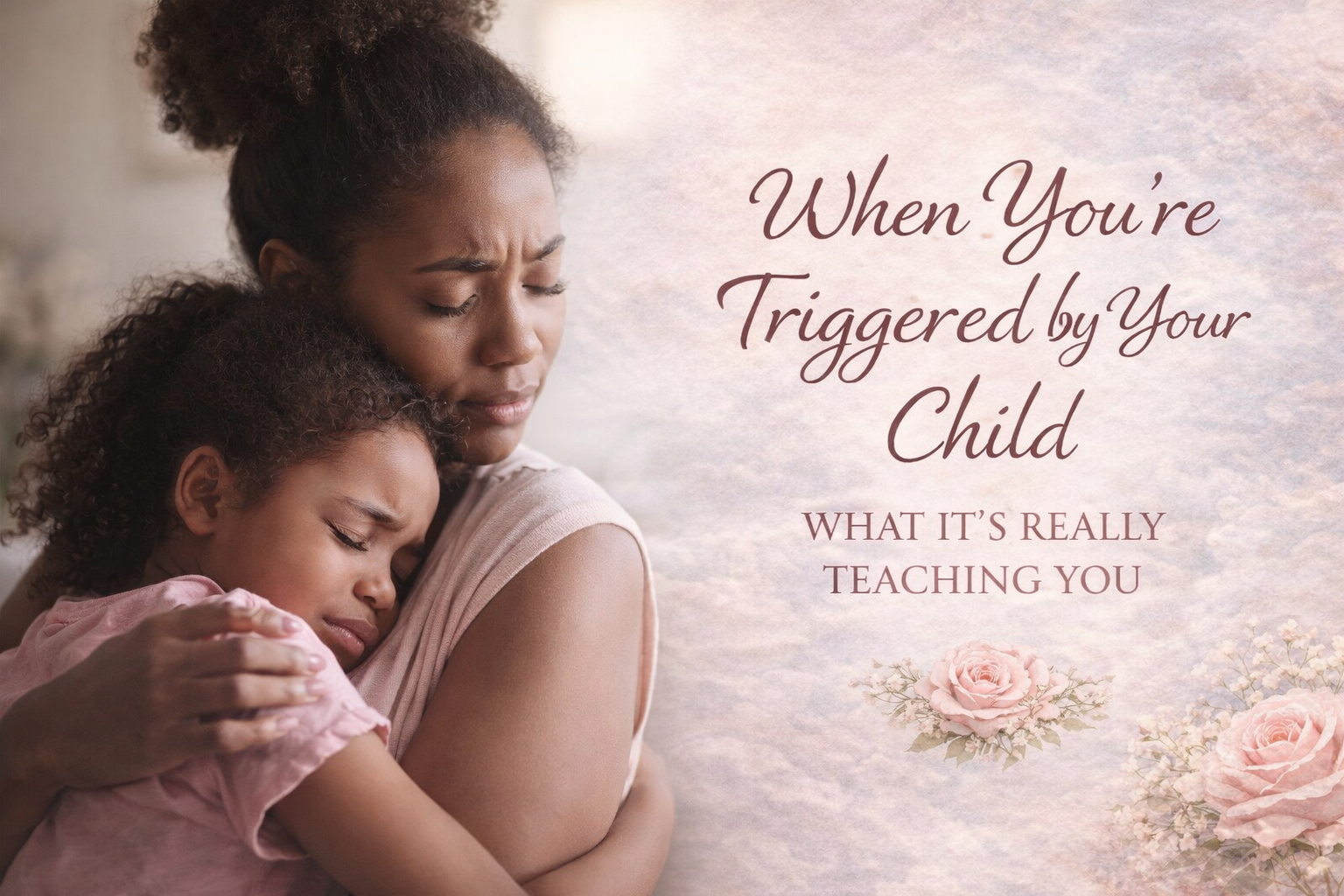
How Unhealed Wounds Influence Parenting — and How to Parent from Security Instead of Survival
If you grew up in chaos, control can feel like safety.
If you grew up unheard, obedience can feel like respect.
If you grew up in instability, strictness can feel like protection.
And without realizing it, you may carry those survival instincts into your parenting.
Not because you are harsh.
Not because you don’t love your children.
But because your nervous system learned that control equals security.
There is a difference between discipline and control.
And understanding that difference can change everything.
Discipline Builds. Control Restricts.
Discipline is guidance.
Control is fear-driven management.
Discipline says:
“I’m teaching you how to navigate life.”
Control says:
“I need you to behave so I can feel safe.”
Discipline corrects behavior.
Control attempts to control emotions.
Discipline is calm and intentional.
Control is reactive and urgent.
And when you grew up in trauma, urgency feels normal.
How Trauma Shapes Parenting Style
Unhealed childhood wounds often show up in subtle ways:
- Overreacting to minor disobedience
- Feeling personally attacked by a child’s tone
- Needing immediate compliance
- Struggling with flexibility
- Feeling overwhelmed by emotional expression
When you were raised in instability, unpredictability can feel dangerous.
So when your child challenges you, delays obedience, or expresses big emotions, your body may respond as if you are under threat.
That is not weakness.
That is conditioning.
But conditioning can be unlearned.
Parenting from Survival Mode
Survival parenting sounds like:
- “Because I said so.”
- “Don’t question me.”
- “Stop crying.”
- “I don’t have time for this.”
It’s not always loud.
Sometimes it’s rigid.
Sometimes it’s emotionally distant.
Survival mode prioritizes order over connection.
It prioritizes immediate quiet over long-term emotional intelligence.
And many of us learned survival before we ever learned security.
Parenting from Security
Security sounds different.
It says:
- “I’m still in charge, but I’m not threatened.”
- “Your emotions are allowed, but your behavior still has boundaries.”
- “We can correct this calmly.”
Security understands that a child’s misbehavior is information, not an attack.
It separates authority from intimidation.
It holds boundaries without hostility.
And security is built — not inherited.
The Fear Beneath Control
Control often hides fear.
Fear of:
- Losing respect
- Raising “disrespectful” children
- Repeating what was done to you
- Being judged as a bad parent
- Failing
When you were not safe as a child, control feels protective.
But your children are not your past.
And discipline does not require domination.
Practical Shifts from Control to Discipline
This is not about becoming passive.
It’s about becoming regulated.
1. Pause Before Correcting
Ask yourself:
“Am I responding to this moment — or to my past?”
Even a 5-second pause interrupts generational reflexes.
2. Separate Disrespect from Development
Sometimes what feels like disrespect is immaturity.
Children are learning impulse control, emotional regulation, and communication.
Correction can be firm without being forceful.
3. Maintain Authority Without Raising Intensity
You do not have to increase volume to increase authority.
Calm consistency is powerful.
Children feel safest when boundaries are predictable — not explosive.
4. Repair When Necessary
If you realize you reacted from survival, you can say:
“I was overwhelmed. I shouldn’t have handled it that way.”
Repair models emotional strength.
It does not weaken leadership.
It strengthens trust.
A Faith Perspective on Discipline
God disciplines with love, not fear.
Hebrews 12:11 reminds us that discipline produces righteousness and peace.
Notice that word: peace.
If your correction leaves chaos in your heart, pause.
Discipline rooted in love produces growth.
Control rooted in fear produces anxiety.
You can be firm and faithful at the same time.
Final Encouragement
If you recognize yourself in this post, breathe.
Awareness means growth has already begun.
You are not abusive because you struggle.
You are not failing because you are learning.
You are a mother who survived something difficult
and is now choosing to build something healthier.
That is strength.
You can parent with boundaries.
You can correct with calmness.
You can lead without fear.
And every time you choose discipline over control,
you are healing two generations at once.
Top of Form
Bottom of Form


1 Comment
[…] The Difference Between Discipline and Control: Parenting After Trauma […]