
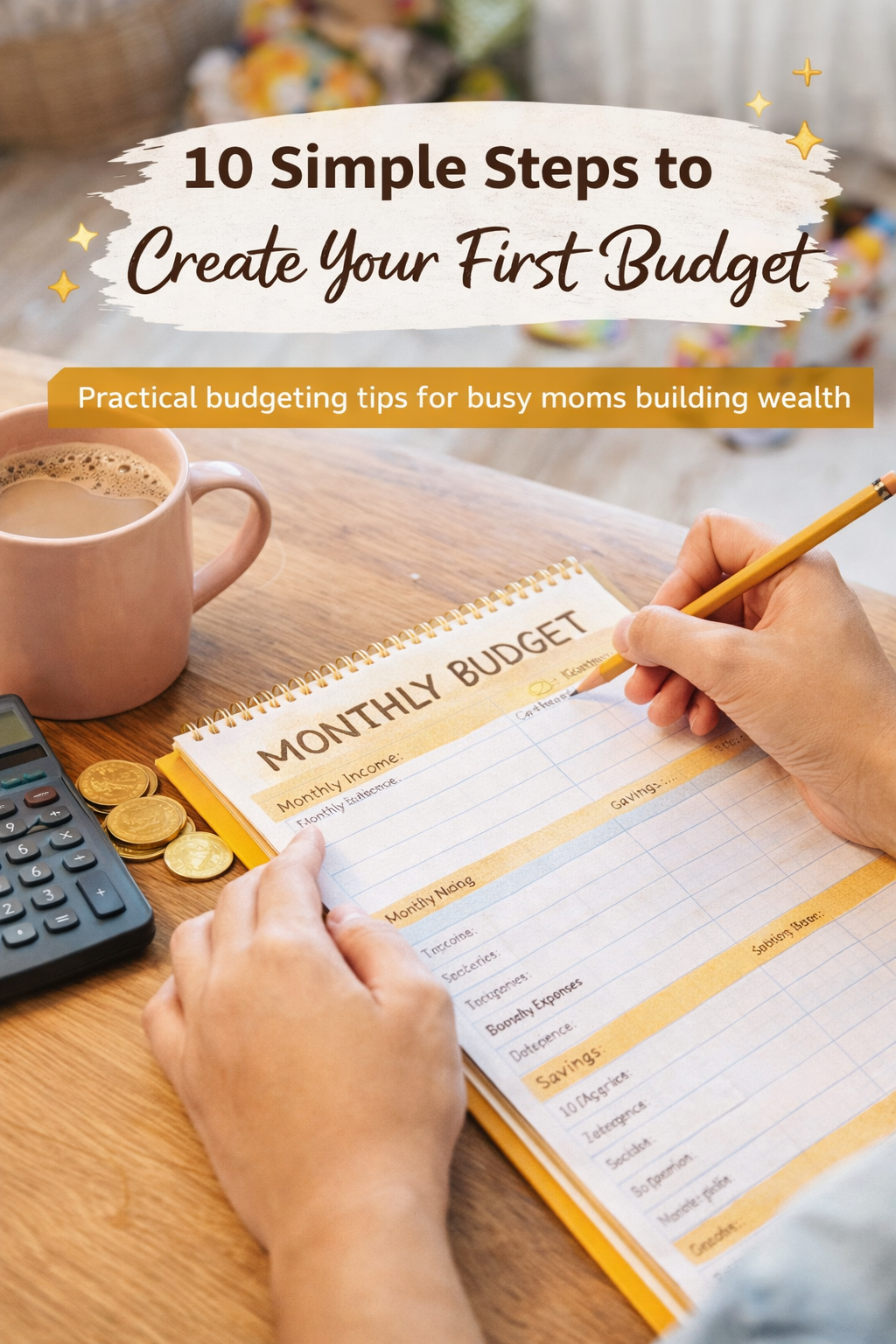
Managing money as a mom can sometimes feel overwhelming. Between groceries, school expenses, bills, and everyday life, it’s easy to feel like your money disappears before the month is over.
But budgeting isn’t about restriction or guilt—it’s about clarity, control, and creating a future that supports your family’s dreams.
When you have a clear plan for your money, you can reduce stress, avoid unnecessary debt, and begin building wealth one step at a time.
If you’re new to budgeting or looking for a fresh start, here are 10 simple steps to help you create your first budget and manage your finances with confidence.
1. Understand Where Your Money Is Going
Before creating a budget, you need to know how your money is currently being spent.
Take a few minutes to review your bank statements or track your expenses for the last month. Write down everything from rent and groceries to subscriptions and coffee runs.
Many moms are surprised to see how small purchases add up. Awareness is the first step toward change.
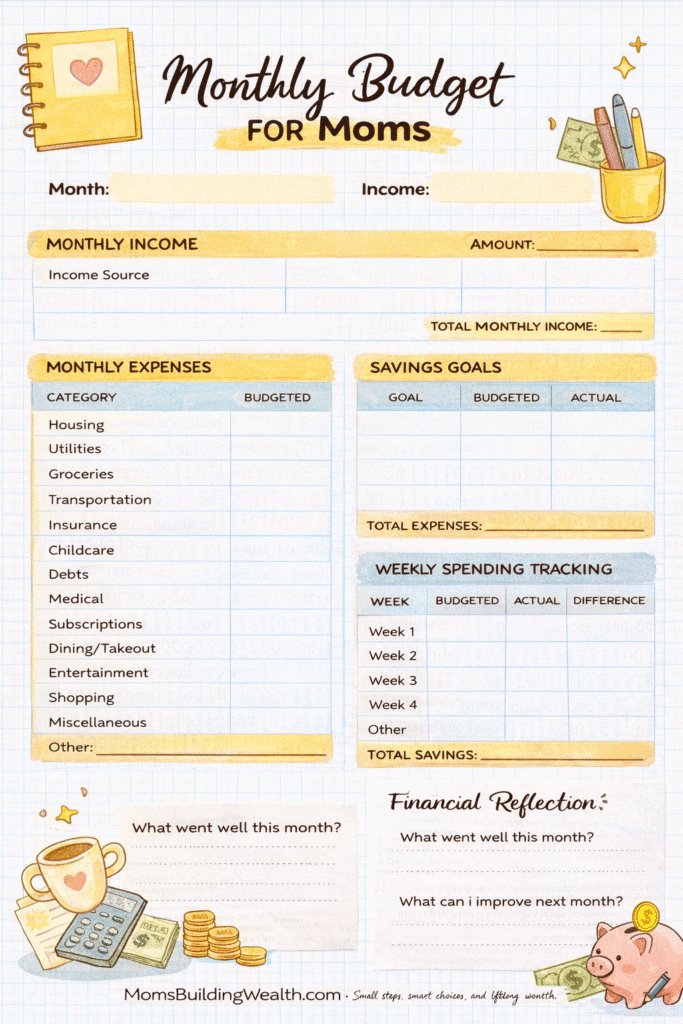
2. Calculate Your Monthly Income
Next, determine how much money is coming in each month.
If your income is steady, this is simple. But if you work freelance, run a small business, or have a variable income, estimate your average monthly earnings over the last three to six months.
Budgeting with a variable income requires flexibility, but it’s absolutely possible.
3. List Your Essential Expenses
Start by listing your non-negotiable expenses, including:
• Housing or rent
• Utilities
• Groceries
• Transportation
• Insurance
• Childcare
• Debt payments
These are the expenses that must be covered first before anything else.
4. Identify Areas Where You Can Cut Back
Once you know your essentials, review the rest of your spending.
Ask yourself:
Do I really need this?
Look for areas where you can reduce unnecessary expenses, such as:
• unused subscriptions
• frequent takeout
• impulse shopping
• unused memberships
Even small changes can create extra money in your budget each month.
5. Try the 50/30/20 Budgeting Method
A simple framework many families use is the 50/30/20 rule.
• 50% Needs – housing, groceries, bills
• 30% Wants – dining out, entertainment, shopping
• 20% Savings or debt repayment
This method provides structure while still allowing room for enjoyment.
6. Build an Emergency Fund
One of the most important financial goals for families is creating an emergency fund.
Unexpected expenses happen—car repairs, medical bills, or sudden job changes.
Start small if necessary. Even saving $20–$50 a week can slowly build a safety net that protects your family from financial stress.
7. Use Budgeting Tools That Work for You
Today, many tools can help you manage your finances more easily.
Some moms prefer simple methods such as spreadsheets or the cash envelope system, while others like digital budgeting apps that automatically track spending.
The best system is the one you will consistently use.
8. Plan for Irregular Expenses
Some expenses don’t happen every month but still need to be planned for.
Examples include:
• holidays
• birthdays
• school supplies
• vacations
• car maintenance
This is where sinking funds can help. A sinking fund simply means setting aside small amounts each month for future expenses.
9. Review Your Budget Monthly
Your budget is not meant to be perfect—it’s meant to be flexible and realistic.
At the end of each month, take time to review your spending and ask:
• What worked well?
• What needs adjusting?
• Where can I improve next month?
Small adjustments help keep your financial plan aligned with your family’s needs.
10. Involve Your Family
Budgeting works best when the whole family understands the goal.
Teach your children basic money habits and include them in simple conversations about saving and spending.
Not only does this reduce financial stress in the household, but it also prepares your children with skills that will benefit them for life.
Final Encouragement
Mama, building wealth doesn’t happen overnight. It happens through consistent, intentional steps.
Every dollar you save, every debt you reduce, and every smart financial decision you make brings your family closer to stability and freedom.
Your budget is not just a spreadsheet—it’s a tool that helps you create security, opportunity, and legacy for your children.
Start small. Stay consistent. And remember that every step forward matters.
Bottom of Form